
The College Green Group team made tracks back to Leeds for this year’s UK Real Estate Investment and Infrastructure Forum (UKREiiF). Armed to the teeth with branded lanyards and some fiercely in-character CGG umbrellas, we were fully prepared to experience the famously unpredictable weather in “God’s Own Country” while reuniting with some brilliant colleagues across industry.
Boasting over 16,000 attendees and a heavyweight line-up of ministers and parliamentarians, the event carried some serious political gravity. For those of us who boarded the packed LNER train from Kings Cross to Leeds, it was clear that legislators were taking the sector’s voice more seriously than ever this year.
Policy under the pavilion
Naturally, policy was high on the agenda, with several major headlines dropping across the pavilions:
- Housing Minister Matthew Pennycook teased that the new National Planning Policy Framework (NPPF) is arriving “very, very shortly”.
- Chancellor Rachel Reeves unveiled “hundreds of millions” in investment packages earmarked to drive growth across the North.
- Housing and Communities Secretary Steve Reed put the spotlight on local leadership, declaring that “this is only the start of devolution… we’ve got to drive it faster.”
- Meanwhile, Reform UK’s Richard Tice MP and Jake Berry championed a distinctively deregulatory approach, pitching tax breaks for town centre regeneration and a serious bonfire of planning red tape.
From commitment to compliance
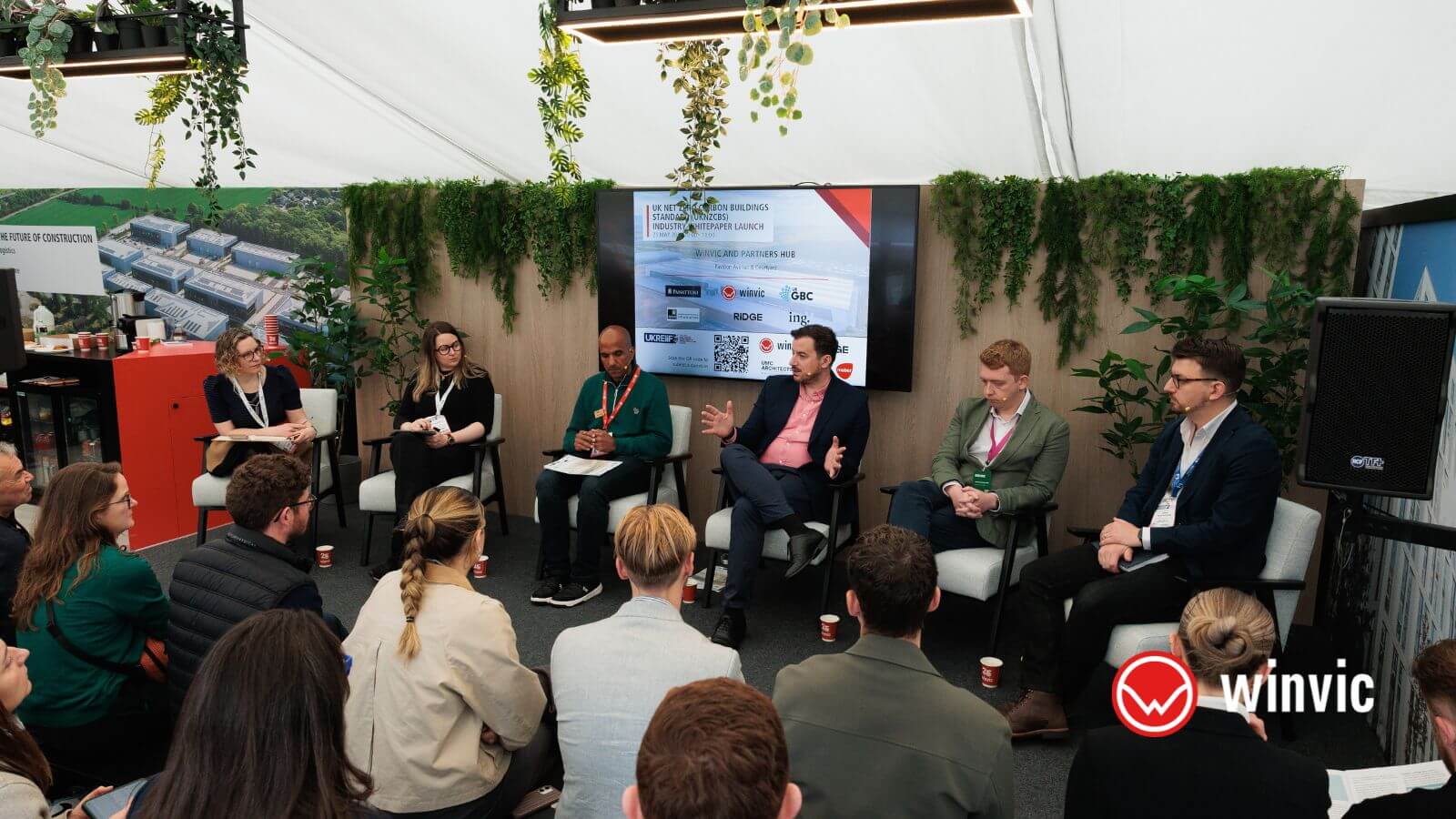
Amidst the policy chatter, we had a fantastic week supporting our partners at Winvic Construction for the launch of their landmark ESG whitepaper, “From Commitment to Compliance: Why the UK Net Zero Carbon Buildings Standard Needs Regulatory Backing.”
The report delivered a crystal-clear call to action, recommending that the Government:
- Embed the standard: Formally weave the UK Net Zero Carbon Buildings Standard (UKNZCBS) into national planning policy and building regulations to drive market-wide adoption.
- Mandate verification: Shift from design-stage guesswork to mandatory assessments of a building’s real-world, operational performance.
- Align financial incentives: Link government funding and financial mechanisms directly to proven, verified carbon outcomes.
- Standardise reporting: Streamline overlapping ESG metrics and guarantee true industry accountability.
For industry leaders, there is much to think about carefully. The market, regulators and investors are all moving in the same direction and businesses that fail to adapt risk being left behind. Key considerations include:
- The era of “design and forget” is over. You can no longer rely solely on theoretical design certificates or speculative ratings. Future asset value will depend on actual, real-world operational data.
- The time to future-proof your pipeline is now. The UKNZCBS is rapidly becoming the built environment’s definitive rulebook. Aligning your projects with it today prevents costly retrofits when national planning policy catches up.
- The days of securing cheap capital based on vague eco-promises are numbered. Future funding and financial incentives will be strictly tied to verified carbon outcomes.
Mayors on a mission
Out on the ground amid the buzz of the conference, we also caught up with a number of devolved mayors who had descended on Leeds. It quickly became clear they were not there simply to observe or appear on a panel.
They were working the room, fostering crucial public-private partnerships, showcasing their authorities immense potential, and pitching hard to secure the transformative investment needed for their local communities.
A key take away for industry is not to wait for national policy to trickle down. Devolution is driving growth from the regions up, so getting on the ground and building local relationships is no longer optional. Mayors have the local mandates and the land, but they need private sector capital and delivery muscle to make things happen.
Looking ahead
If this year’s UKREiiF proved anything, it is that the built environment is entering a new era where policy, investment and delivery are becoming ever more closely intertwined. From the accelerating pace of devolution to the growing demand for sustainable outcomes, those who engage early, forge the right partnerships and adapt proactively to the evolving policy landscape will be best placed to capitalise on the opportunities ahead.
At College Green Group, we bring industry evidence into policy conversations, helping to turn shared challenges into practical policy recommendations.
If you are facing policy barriers that need to be unblocked, we are always available for a coffee or a video call. Please do get in touch.