For foreign ministers and diplomats, London has always been a complex landscape to navigate. But today, the atmosphere in Westminster feels different. We see a government and a public wrestling with economic constraints, looking inward, and re-evaluating the UK’s place in a volatile world.
The British Foreign Policy Group (BFPG) confirms what many of us have been observing on the ground in its 2026 Annual Survey: that the moralistic, values-first internationalism of the past decade is fading. In its place, we see a much tougher, more transactional outlook taking hold.
If you are looking to secure trade agreements, attract investment, or build lasting influence in the UK, understanding this shift is the single most important task for your team. You cannot engage the UK of 2026 with the playbook of 2020.
For years, conventional wisdom suggested that UK trade deals were anchored in shared social values. Today, domestic cost-of-living pressures have dismantled that consensus.
The British public is now appearing to be remarkably pragmatic. A clear majority of voters support trade deals even with countries they openly distrust, provided those deals deliver tangible economic benefits to the UK. We see this in the data: the British public is willing to decouple their personal feelings about a trade partner’s internal politics from the necessity of a profitable commercial relationship.
My advice to trading partners that might fit in the above frame would be to not spend your limited diplomatic currency trying to prove perfect political or social alignment with the UK’s domestic agenda. Instead, make the case for economics. Frame your bilateral proposals around how they lower supply chain costs for British households, secure critical minerals for the UK’s green transition, or open up high-growth markets for British professional services.
The evolving logic of development
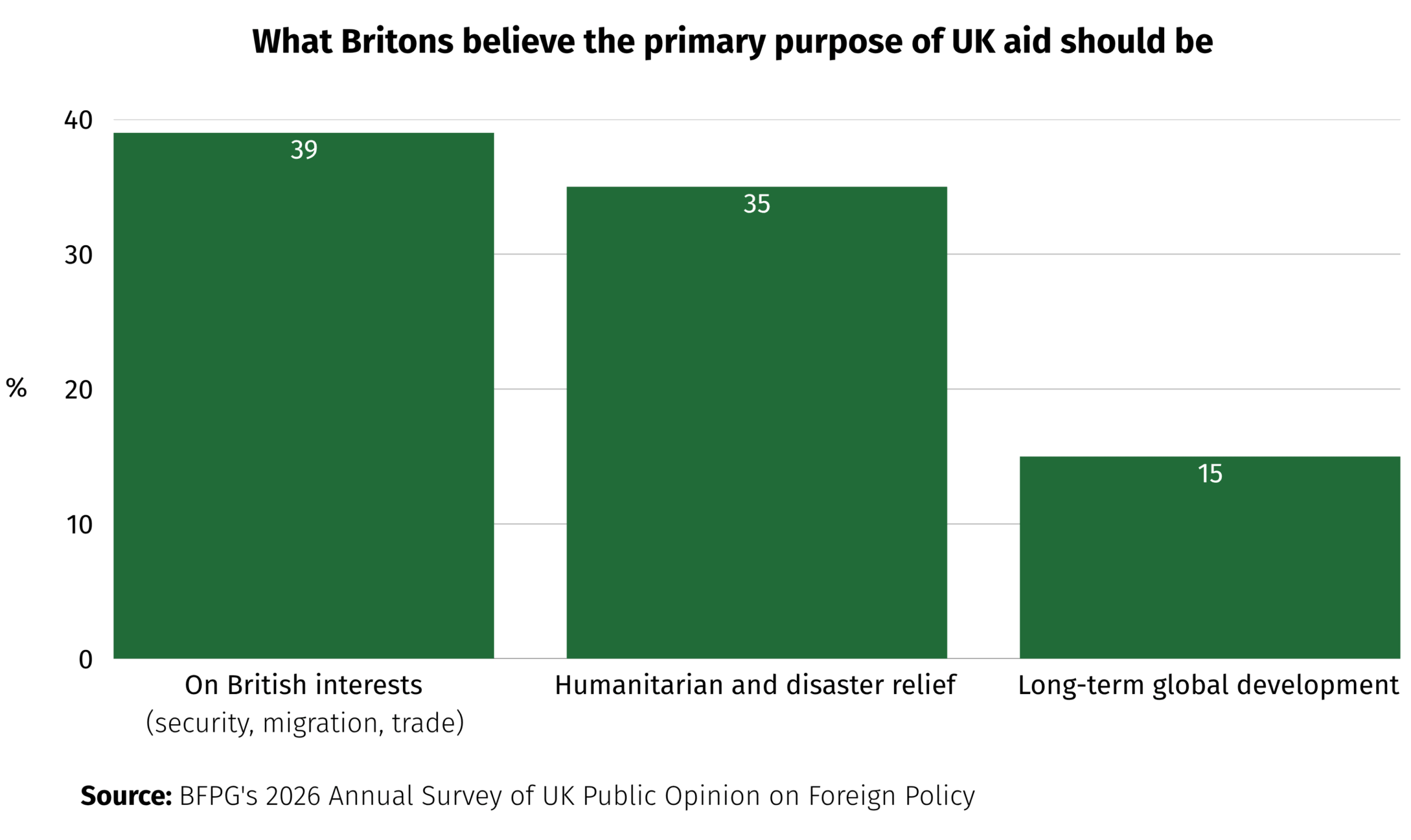
Historically, the UK public supported international development on humanitarian grounds. That consensus has fractured. A plurality of Britons now believe the primary purpose of UK aid should be to serve the UK’s own national interests such as promoting security, managing migration, or laying the groundwork for future trade.
When you approach Whitehall for development partnerships, climate finance, or technical assistance, the language of “moral obligation” or “historical debt” no longer resonates as it once did. Successful diplomats are re-branding these proposals as mutual-interest partnerships.
If you want to secure infrastructure funding, show how that investment contributes to local stability and directly curbs irregular migration. If you are seeking agricultural development partnerships, demonstrate how they consolidate resilient food supply chains for both nations at a time of relative insecurity. The message must move from “help us” to “let’s grow together symbiotically.”
Filling the reliability vacuum
The BFPG survey highlights a striking drop in public trust toward the United States, with only 38% of Britons now trusting Washington to act responsibly on the world stage. While the UK political establishment remains occupied with trying to rebuild ties with Europe, there is a quiet, underlying anxiety in Whitehall about becoming geopolitically isolated or overly reliant on a volatile transatlantic relationship.
This creates a distinct opening for capitals in Africa and the Caribbean. By positioning your nation as a stable, predictable partner with robust legal frameworks and deep historical ties, you offer Whitehall a reliable alternative in an increasingly uncertain world. As the UK looks to diversify its strategic relationships, emphasising your reliability, consistency, and commitment to the rule of law will set you apart from more mercurial global players.
Leveraging soft power in a cash-strapped Britain
The British public remains deeply anxious about global security, but they have very little appetite to pay for it. A majority may support higher defence spending in theory, but that support evaporates the moment it threatens funding for the NHS or local schools.
Because the UK is financially constrained in its ability to project hard power, Whitehall is relying heavily on soft power to maintain its global standing.
For the Global South, this is an area of significant strength. Your diaspora communities in the UK, along with your educational, cultural, and sporting links, are massive assets. They are effective avenues of influence that require minimal capital expenditure. Engaging these networks directly creates domestic advocates within the UK electorate – something British MPs, who are constantly looking toward the next election, pay close attention to.
Moving forward
The rules of engagement in London have changed. The UK is looking inward, adopting a cautious, self-interested approach to the world that we haven’t seen in decades.
For foreign ministers, the path to winning influence and attracting British FDI does not lie in appealing to Whitehall’s altruism. It lies in presenting clear, pragmatic opportunities that help British policymakers solve their own domestic economic puzzle. By speaking the language of mutual interest, you shift from being a supplicant to a strategic partner.
As you look at your country’s current diplomatic engagement strategy with London, which specific economic sector do you think is currently the most underutilised in terms of its potential to appeal to the UK’s current focus on domestic resilience?
Ultimately, the countries that thrive in this new Westminster will be the ones that stop asking what Britain believes in and start asking what Britain needs. That’s not cynicism – it’s clarity. The UK isn’t retreating from the world, it’s simply being honest about the trade-offs it now has to make, and that honesty is an opportunity for anyone willing to meet it head-on.
Diplomacy in 2026 rewards precision over sentiment: know the sector, know the domestic pressure point and build your pitch around solving it. Get that right, and you won’t just get a meeting in Whitehall – you’ll get a seat at the table.